V LUXE DENTAL ATELIER · KOLLAM
Advanced Dental Implants in Kollam
Replace missing teeth with a carefully planned dental implant solution designed around your oral health, function, appearance, and long-term needs.
At V Luxe Dental Atelier, we combine detailed dental assessment, personalized treatment planning, modern implant dentistry, and restorative expertise to help patients explore suitable options for replacing missing teeth.
 Care, considered.
V Luxe Dental Atelier
INTRODUCTION
A Confident Solution for Missing Teeth
Missing teeth can affect more than the appearance of your smile. They may influence chewing, speech, bite function, and your overall confidence.
Dental implants are designed to replace the root portion of a missing tooth and can support a crown, bridge, or denture. They can be used to replace a single tooth or multiple missing teeth, depending on the patient's needs and treatment plan.
At V Luxe Dental Atelier, we take an individualized approach to implant treatment. Rather than recommending the same solution for every patient, we first assess your oral health, existing teeth, gums, jawbone, bite, and overall treatment requirements.
The goal is to develop a treatment plan that considers both function and appearance while prioritizing the health of your mouth.
WHAT ARE DENTAL IMPLANTS?
Understanding Dental Implants
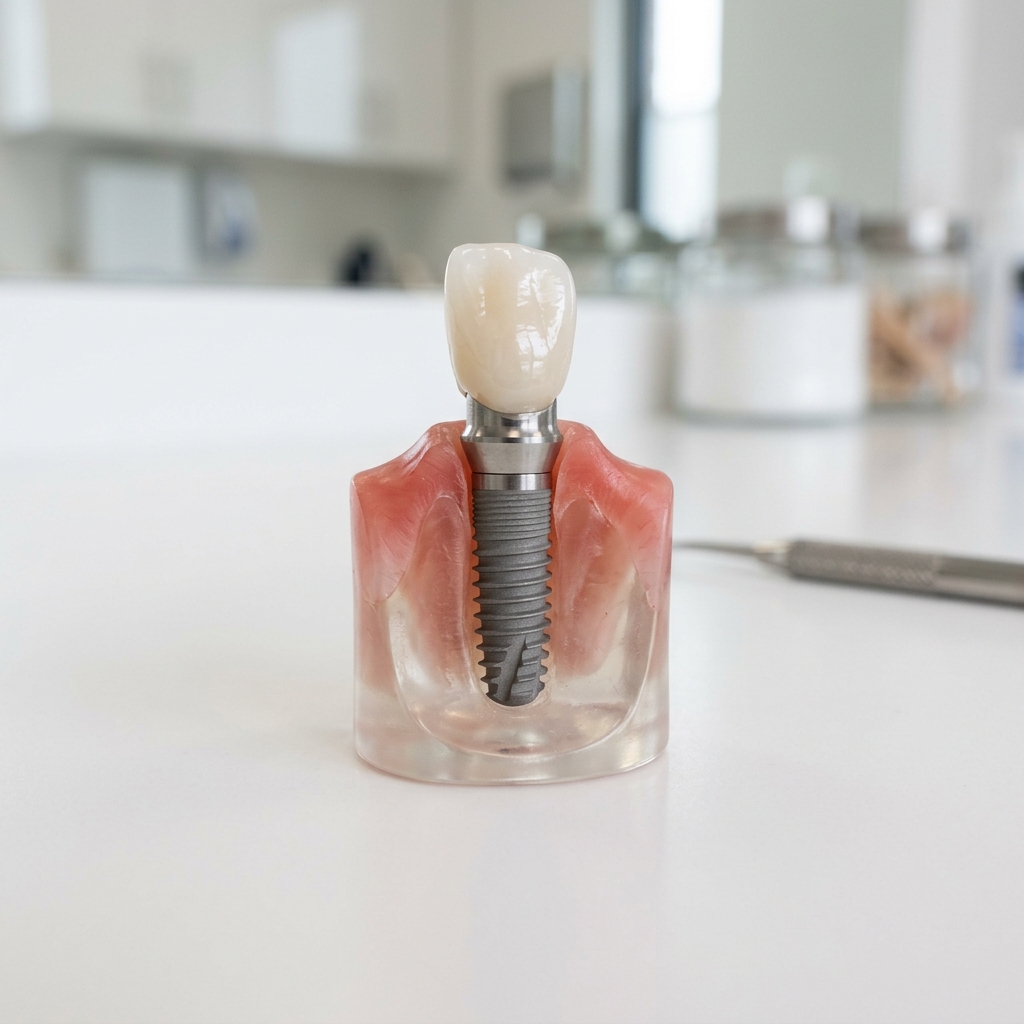
A dental implant is a small implant fixture placed into the jawbone to replace the root portion of a missing tooth.
Once the implant has healed and integrated with the surrounding bone, it can be used to support a dental restoration such as a crown, bridge, or denture.
A typical implant restoration may involve three main components:
Implant
The component placed within the jawbone to provide support.
Abutment
A connecting component that joins the implant to the final restoration.
Crown, Bridge or Denture
The visible restoration used to replace one or more missing teeth.
The exact treatment approach depends on the number of missing teeth, available bone, gum health, bite, and individual clinical requirements.
WHY CONSIDER DENTAL IMPLANTS?
Benefits of Dental Implant Treatment
For appropriately selected patients, dental implants can provide a fixed option for replacing missing teeth.
Potential advantages include:
Natural-Looking Tooth Replacement
Implant-supported restorations can be designed to complement your existing teeth and smile.
Improved Function
Replacing missing teeth can help restore chewing and biting function.
Support for Dental Restorations
Implants can support individual crowns, bridges, or implant-supported dentures.
Replacement Without Preparing Adjacent Teeth
For suitable single-tooth cases, an implant-supported crown can replace the missing tooth without requiring the neighbouring teeth to serve as bridge supports.
Long-Term Oral Care
With appropriate professional care and good oral hygiene, implant restorations can be maintained as part of a long-term dental care plan.
WHO MAY NEED DENTAL IMPLANTS?
Is Dental Implant Treatment Right for You?
Dental implants may be considered when one or more teeth are missing or need to be replaced.
They may be suitable for patients requiring:
- Single-tooth replacement
- Replacement of several missing teeth
- Implant-supported bridges
- Implant-supported dentures
- Full-arch tooth replacement
- Replacement of teeth that cannot be predictably restored
However, dental implants are not automatically suitable for every patient.
The health of your gums, available jawbone, oral hygiene, smoking status, existing dental problems, and other individual factors can influence treatment planning and outcomes.
A comprehensive dental assessment is therefore an important first step.
TYPES OF DENTAL IMPLANT SOLUTIONS
Dental Implant Options for Different Needs
Single Tooth Implant
When one tooth is missing, an individual implant can be used to support a replacement crown where clinically appropriate.
Multiple Dental Implants
When several teeth are missing, multiple implants may be used to support individual restorations or an implant-supported bridge, depending on the case.
Implant-Supported Bridge
Implants can provide support for a bridge that replaces multiple adjacent missing teeth.
Implant-Supported Dentures
For patients who have lost several or all teeth, implants may be used to improve the support and stability of a removable or fixed restoration, depending on the treatment plan.
Full-Arch Implant Treatment
For extensive tooth loss, a full-arch rehabilitation may be considered. The appropriate number and position of implants depend on the individual's anatomy, oral health, restorative requirements, and clinical assessment.
OUR IMPLANT TREATMENT PROCESS
How Dental Implant Treatment Works
01 — Consultation
Your treatment begins with a detailed consultation. We discuss your concerns, dental history, expectations, and treatment goals.
02 — Comprehensive Assessment
Your teeth, gums, bite, jawbone, and overall oral health are evaluated to determine the most appropriate treatment options.
03 — Treatment Planning
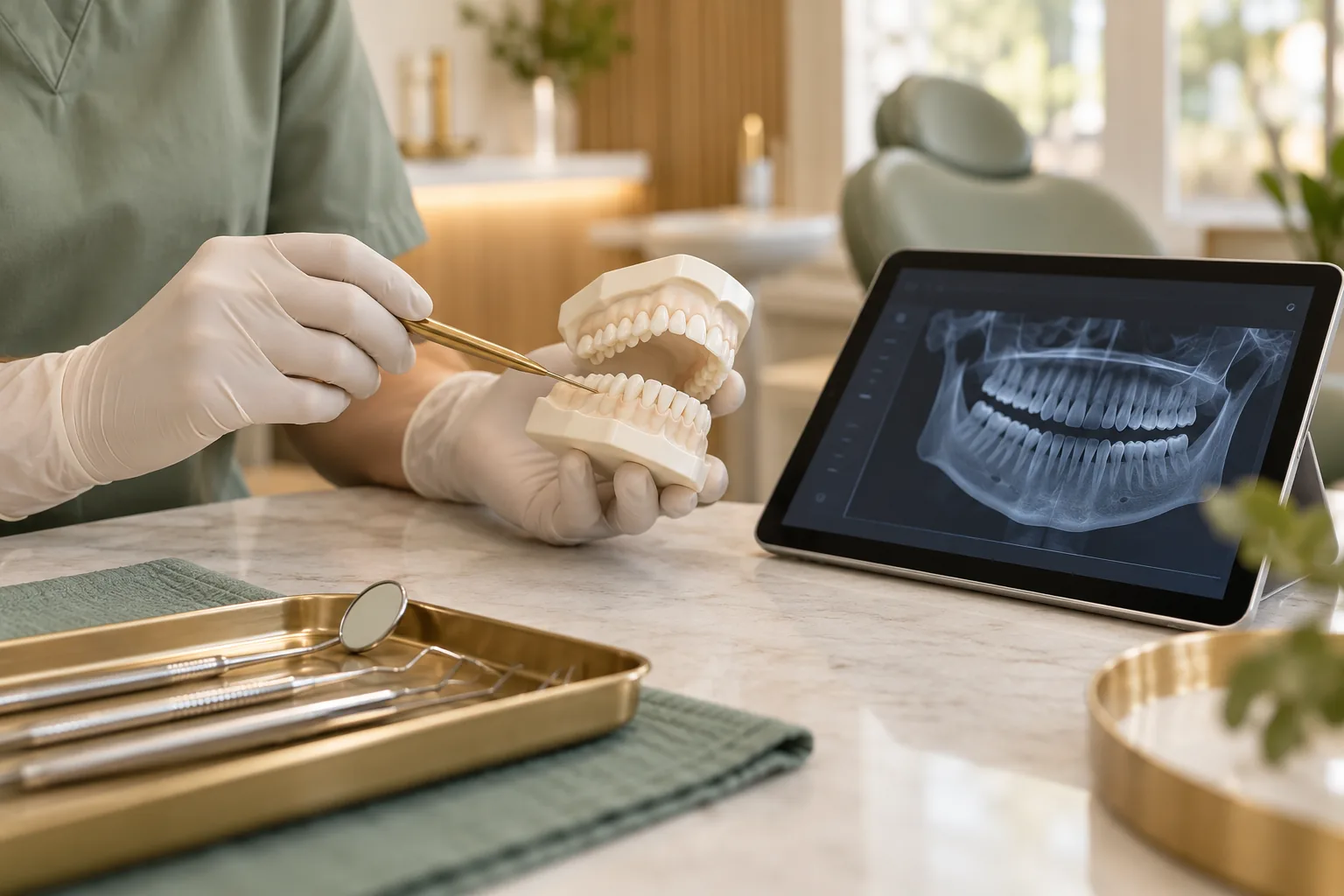
Based on the assessment, your dentist develops an individualized treatment plan. Imaging and other diagnostic information may be used when required.
04 — Implant Placement
When an implant is considered appropriate, the implant fixture is placed into the jawbone using the planned surgical approach.
05 — Healing and Integration
The implant requires a period of healing so that it can integrate with the surrounding bone. The exact healing period varies according to the individual case.
06 — Final Restoration
Once the appropriate healing and clinical checks have been completed, the final crown, bridge, or denture is fitted according to the treatment plan.
07 — Maintenance
Regular dental examinations and good oral hygiene are important for maintaining your oral health and implant restoration over time.
BONE GRAFTING AND IMPLANT PREPARATION
What If There Isn't Enough Bone?
The amount and quality of available jawbone can influence implant planning.
In some patients, additional procedures may be considered to increase the available bone and create more suitable conditions for implant placement. Bone grafting is one technique that may be used when additional bone is required.
Not every implant patient requires bone grafting.
Your dentist will assess your individual anatomy and determine whether additional treatment is necessary before or alongside implant placement.
WHY CHOOSE V LUXE FOR IMPLANT DENTISTRY?
Implant Dentistry Planned Around You
Detailed Assessment
We begin with understanding your oral health rather than immediately recommending a procedure.
Personalized Planning
Every implant case is different. Treatment is planned according to your teeth, gums, bone, bite, aesthetics, and individual requirements.
Multidisciplinary Expertise
Implant treatment may involve restorative, surgical, periodontal, orthodontic, and cosmetic considerations. Our multidisciplinary approach allows these factors to be considered together.
Modern Dental Approach
Contemporary diagnostic and treatment techniques support careful planning and precise clinical execution.
Natural-Looking Restoration
The final restoration is planned with consideration for tooth shape, colour, proportion, bite, and your existing smile.
Long-Term Focus
Implant treatment does not end when the restoration is placed. Regular dental care and good oral hygiene are important for maintaining the health of your mouth and restoration.
DENTAL IMPLANTS VS OTHER TOOTH REPLACEMENT OPTIONS
Which Tooth Replacement Option Is Right for You?
Dental implants are one of several options available for replacing missing teeth.
Depending on your condition, alternatives may include:
Dental Implants
A fixed implant-supported option that replaces the root portion of a missing tooth and supports a restoration.
Dental Bridges
A fixed restoration that replaces missing teeth using support from adjacent teeth or implants.
Dentures
Removable restorations that can replace some or all missing teeth.
The most appropriate option depends on your oral health, number and location of missing teeth, bone and gum condition, functional requirements, preferences, and treatment goals.
A dentist should evaluate your condition and explain the available alternatives before treatment.
AFTER DENTAL IMPLANT TREATMENT
Caring for Your Dental Implants

Good oral hygiene and regular professional follow-up are important after implant treatment.
Your dental care routine may include:
- Brushing your teeth regularly
- Cleaning around the implant restoration
- Cleaning between teeth and around the gums
- Following your dentist's post-treatment instructions
- Attending recommended follow-up appointments
- Informing your dentist about any discomfort or changes
- Avoiding habits that could damage your teeth or restoration
Long-term implant care depends on good oral hygiene, healthy gums, regular professional maintenance, and following your dentist's recommendations.
WHEN SHOULD YOU CONSIDER A DENTAL IMPLANT CONSULTATION?
Don't Let Missing Teeth Affect Your Everyday Life
Consider speaking with a dental professional if you have:
- One or more missing teeth
- Difficulty chewing because of missing teeth
- Loose or uncomfortable dentures
- A damaged tooth that may require extraction
- Gaps affecting your smile
- Difficulty maintaining a dental bridge
- Concerns about replacing missing teeth
- Questions about implant-supported restorations
An implant consultation can help you understand whether dental implants are appropriate for your specific situation and what alternatives may be available.
FAQ
Frequently Asked Questions About Dental Implants
What are dental implants?
Dental implants are fixtures placed into the jawbone to replace the root portion of missing teeth and support restorations such as crowns, bridges, or dentures.
Are dental implants suitable for everyone?
No. Suitability depends on individual factors such as oral health, gum condition, available bone, smoking, existing dental problems, and overall treatment requirements. A professional assessment is necessary.
Can I replace just one missing tooth?
Yes. A single missing tooth can often be replaced using an implant-supported crown when the patient is clinically suitable.
Can dental implants replace multiple teeth?
Yes. Multiple missing teeth may be replaced using individual implants, implant-supported bridges, or other implant-supported solutions depending on the case.
Do dental implants look natural?
Implant-supported restorations can be designed to complement your existing teeth, including their shape, colour, size, and overall appearance.
Do I need bone grafting before an implant?
Not necessarily. Some patients have sufficient bone for implant placement, while others may require additional bone-building procedures. Your dentist can determine this through a clinical assessment and appropriate imaging.
How long does dental implant treatment take?
Treatment time varies significantly between patients. It depends on the number of implants, healing requirements, bone condition, need for additional procedures, and type of final restoration.
How should I care for dental implants?
Maintain good oral hygiene, clean around the restoration, attend regular dental appointments, and follow your dentist's individual maintenance instructions.
FINAL CTA
Ready to Explore Dental Implants?
Replacing missing teeth is an important decision.
At V Luxe Dental Atelier, we take the time to understand your dental condition, explain your options, and develop a treatment plan based on your individual needs.
If you are considering Advanced Dental Implants in Kollam, schedule a consultation to discuss your options.
Book Your Implant Consultation Contact V Luxe Dental AtelierYOUR SMILE. YOUR JOURNEY.